Launching a book is one thing. Presenting it to real audiences — colleagues, students, skeptics, enthusiastic practitioners — is another. Over the past two months, I have done that repeatedly: an official launch event with Mike in Copenhagen, a workshop with our PhD students at Eindhoven University of Technology (TU/e), a seminar at the Tilburg School of Economics and Management (TiSEM) at Tilburg University, a masterclass for colleagues from the Department of Industrial Engineering & Innovation Sciences and the Department of Industrial Design at TU/e, and a handful of online webinars.
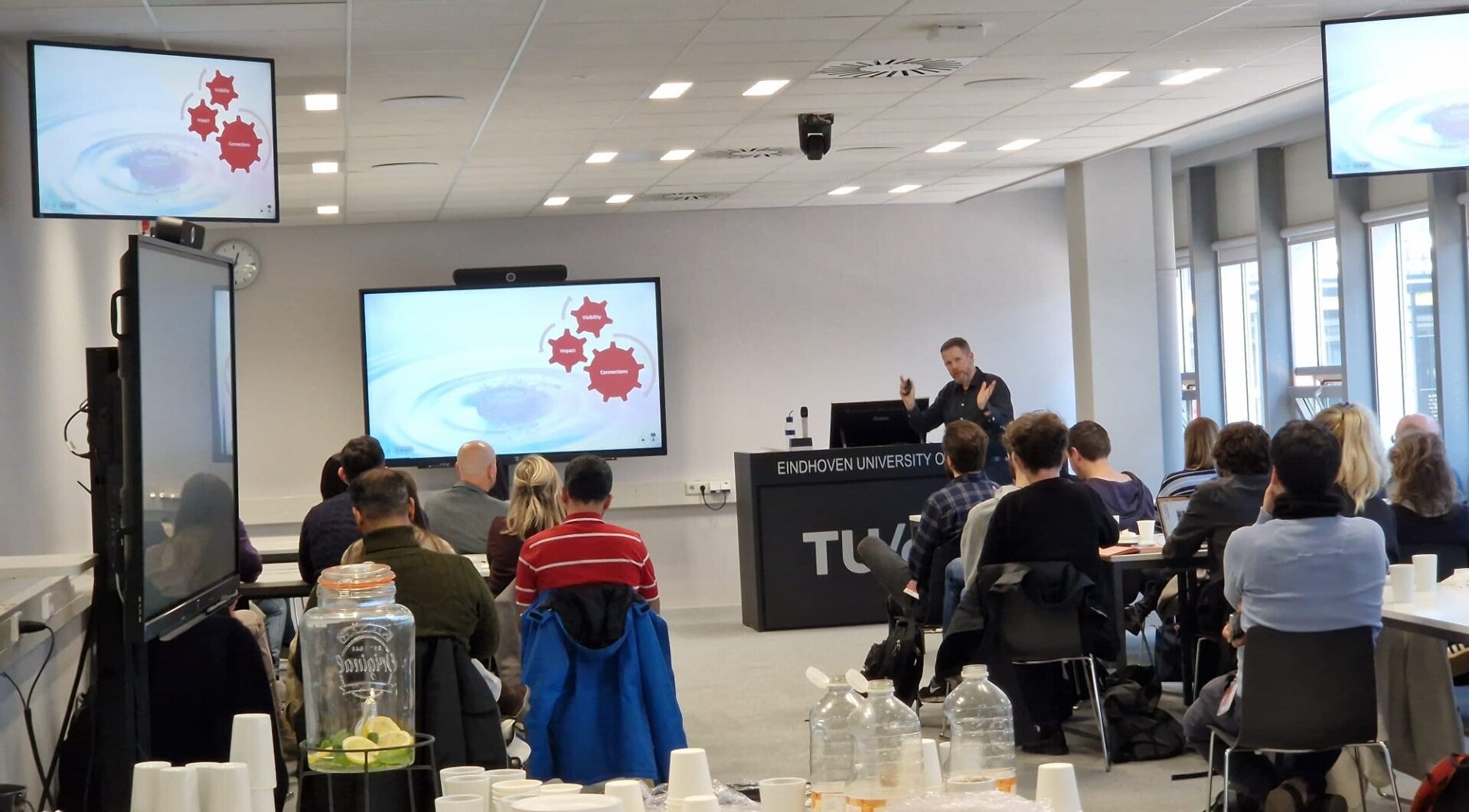
Each time I learned something — about the audience, about the framing of the book, and occasionally about myself. This post is my attempt to share some of those lessons. It is less about the book itself — I covered that in my earlier post on the launch — and more about what presenting it has revealed. It is also more honest about the effort a book launch actually requires, which is more than I expected.


Photos from the Copenhagen launch — credit: Jonas Pryner Andersen
From publication date to launch events
The official launch event took place on 19 February 2026, at Munkekælderen at the University of Copenhagen — a location that felt right, given that Copenhagen is the other place I call home institutionally, and where I developed a lot of thinking and practice on the topic. As co-authors of the book, Mike and I opened with a brief introduction to the book, and then handed over to three "conversationists" who brought their own angles to the question of social media and research: Courtney Herms, a postdoc in agricultural microbiology who has built a genuine presence on microblogging platforms; Malene David Jensen-Juul, a research communications specialist at the Geological Survey of Denmark and Greenland (GEUS); and Raluca Alexandra Stana from Roskilde University, who researches technostress and digital wellbeing — a reminder that the book's honest treatment of the dark side of social media is not just a nod toward balance, but reflects real issues that scholars navigate. The format worked well: less lecture, more conversation, which is also what the book is arguing for. For me, a central topic was balance , as that is what you want to create across platforms, audiences, tone, timing, and personal boundaries. As we try to explain in the book, finding that balance is essentially a mindset rather than a pure technical exercise. Books were available at a discount, and the evening ended with mingling. It was the kind of event that felt like a beginning rather than a closing bracket.
A few days later, back in Eindhoven, I ran a workshop with the PhD students and one postdoc from the ITEM group at TU/e — a smaller, more focused session that felt quite different from a public launch event. We worked through the full Researcher's Social Media Compass, starting with Purpose: why are you on social media as a researcher at all? Visibility? Dialogue? Testing ideas? Building networks? The discussion was open and honest. Some participants were still exploring; others were already quite intentional. That mix is actually what makes these sessions work — the diversity of starting points generates better conversation than a room full of people who all think the same way about it.
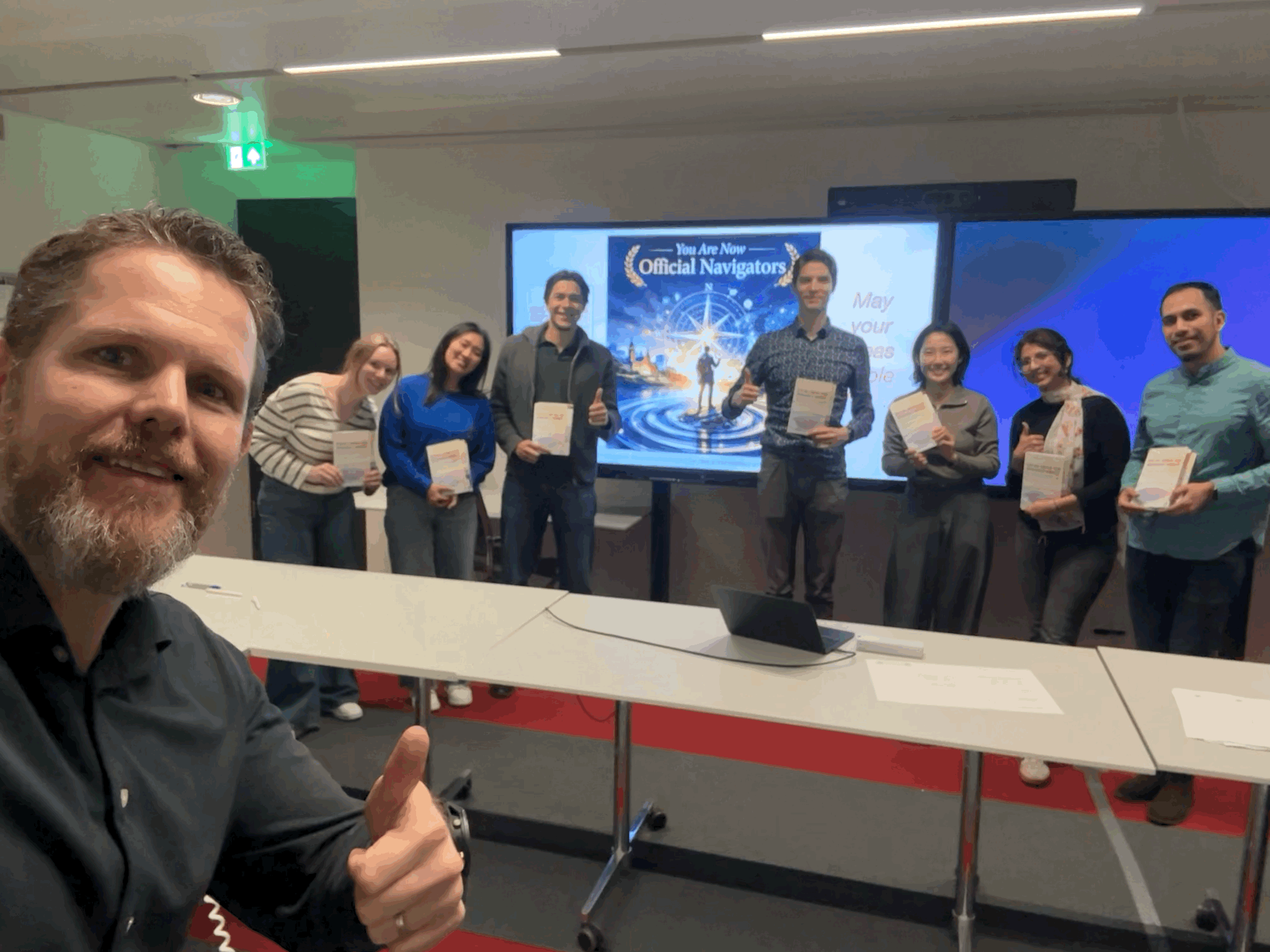
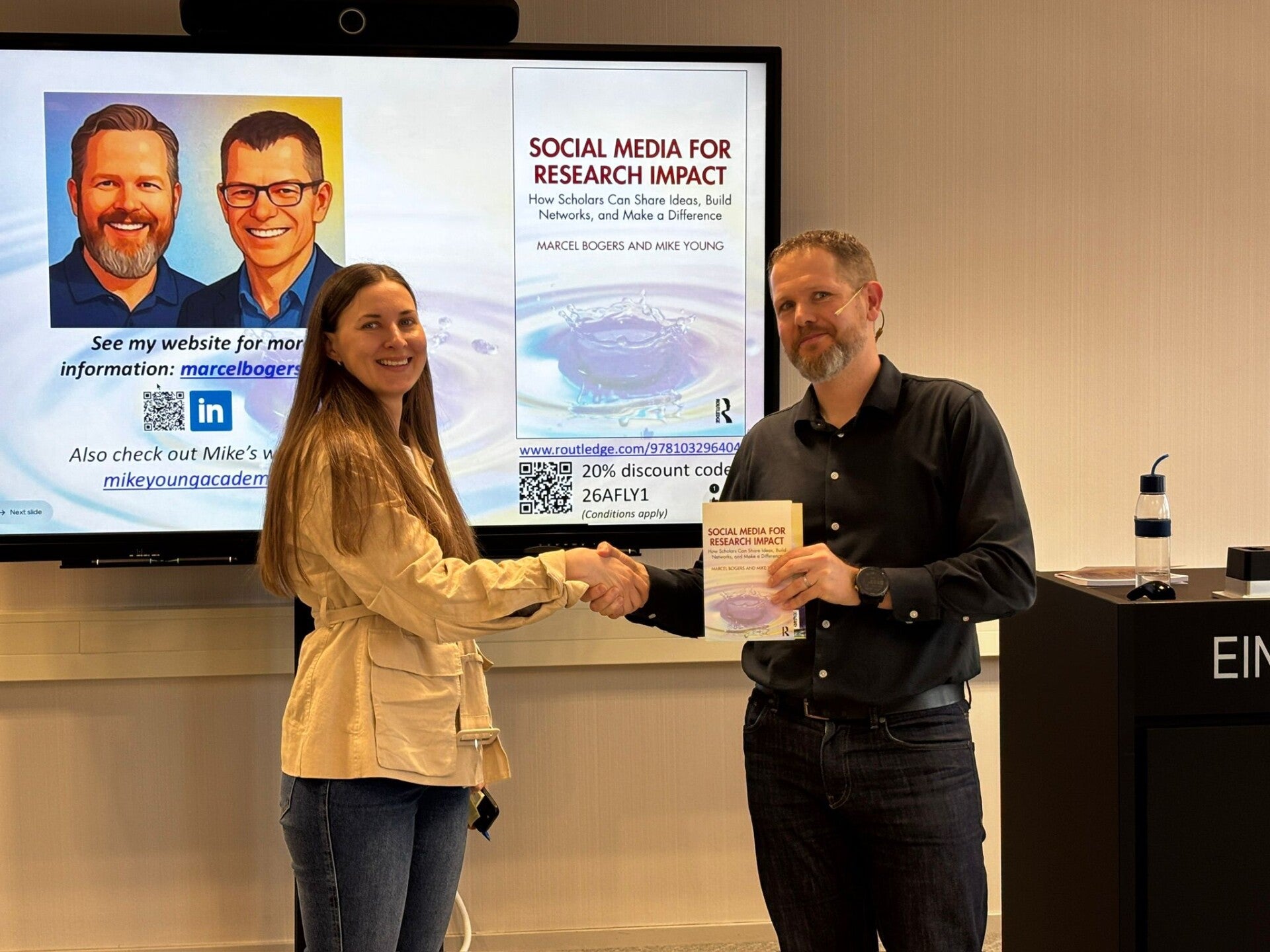
We then moved from the Compass to the Compass Craft Canvas, translating strategy into one concrete action per person: a post, a comment, a thread — something real and aligned with their own context. At the end, I officially declared them Social Media Navigators and handed each of them a copy of the book. Seeing them hold it made me genuinely proud. The questions they asked were sharp and constructive — the kind that push you to refine the workshop itself, not just deliver it. PhD students have a particular way of cutting through abstraction: they want to know what this means for their research, their field, their stage of career, and that specificity makes the conversation far more useful than any generic audience. And they gave me a beautiful pen engraved with "ITEM, TU/e" — I promised, half joking and half serious, to write the second edition with it.
The story I keep telling — and why it keeps landing
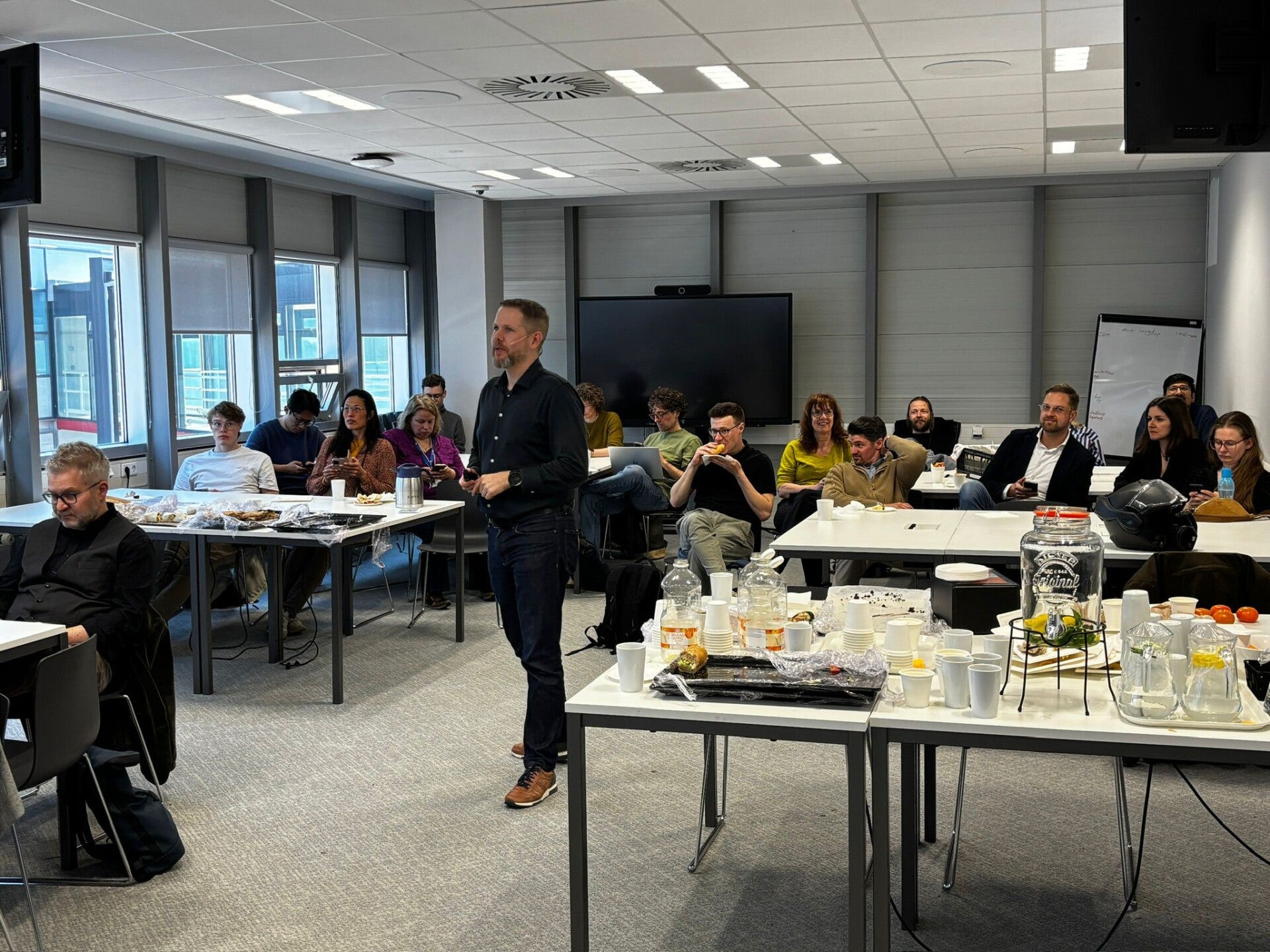
At TiSEM in Tilburg, something clicked in how I told the origin story of this book. Tilburg is a place that has a particular meaning in my career: I was once offered a tenure-track assistant professor position there, and I turned it down. Instead, I took a postdoc at a multi-disciplinary research center that, at the time, felt somewhat isolated from the core of my discipline. It was not the obvious choice.

Picture taken during seminar by ISOM LinkedIn coordinators
What made me believe it could work was social media. Specifically, what was then a very early version of Twitter and Facebook — platforms that, I suspected, would let me stay connected to my communities, share ideas across institutional boundaries, and build a presence that did not depend on being physically in one particular place. That calculation turned out to be right. And when I look back at it now, that moment — somewhere around 2008-2009 — was one of the sparks that eventually produced this book.
Overall, it was a very interesting session, with quite some interesting questions and discussions. For example, we talked about why you would be on social media in the first place, how to develop sustainable practices, how (not) to use AI authentically, how the wrong framing of posts can actually make people disengaged, and how to manage your connections/relations online.
The broader point is that social media was always, for me, a tool for solving a real professional problem: how do you build a network and create impact when you are not in the most visible institutional position? That is still the question the book is trying to answer, and it turns out that question is quite universal.
What I learned from making it interactive at TU/e
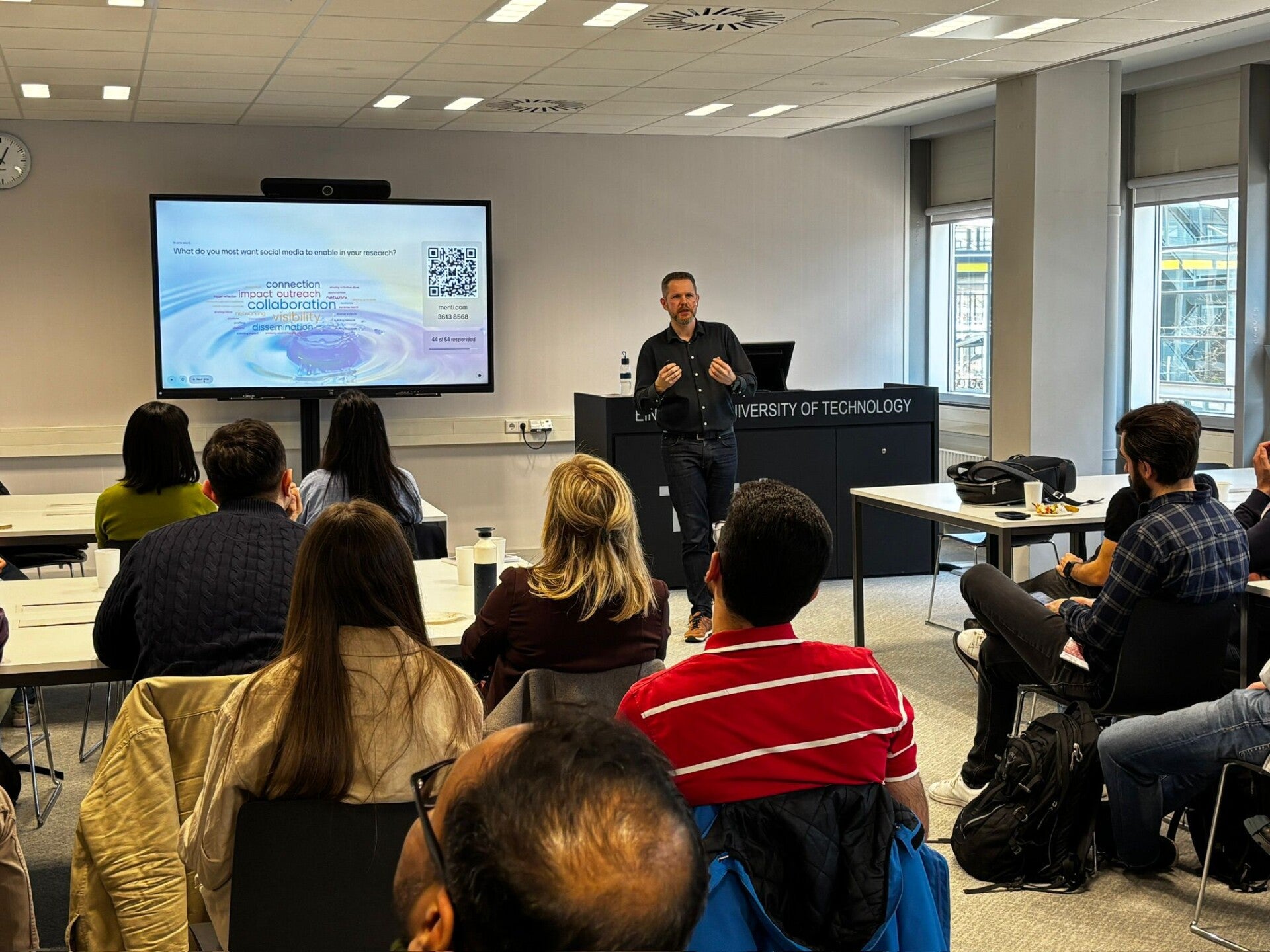
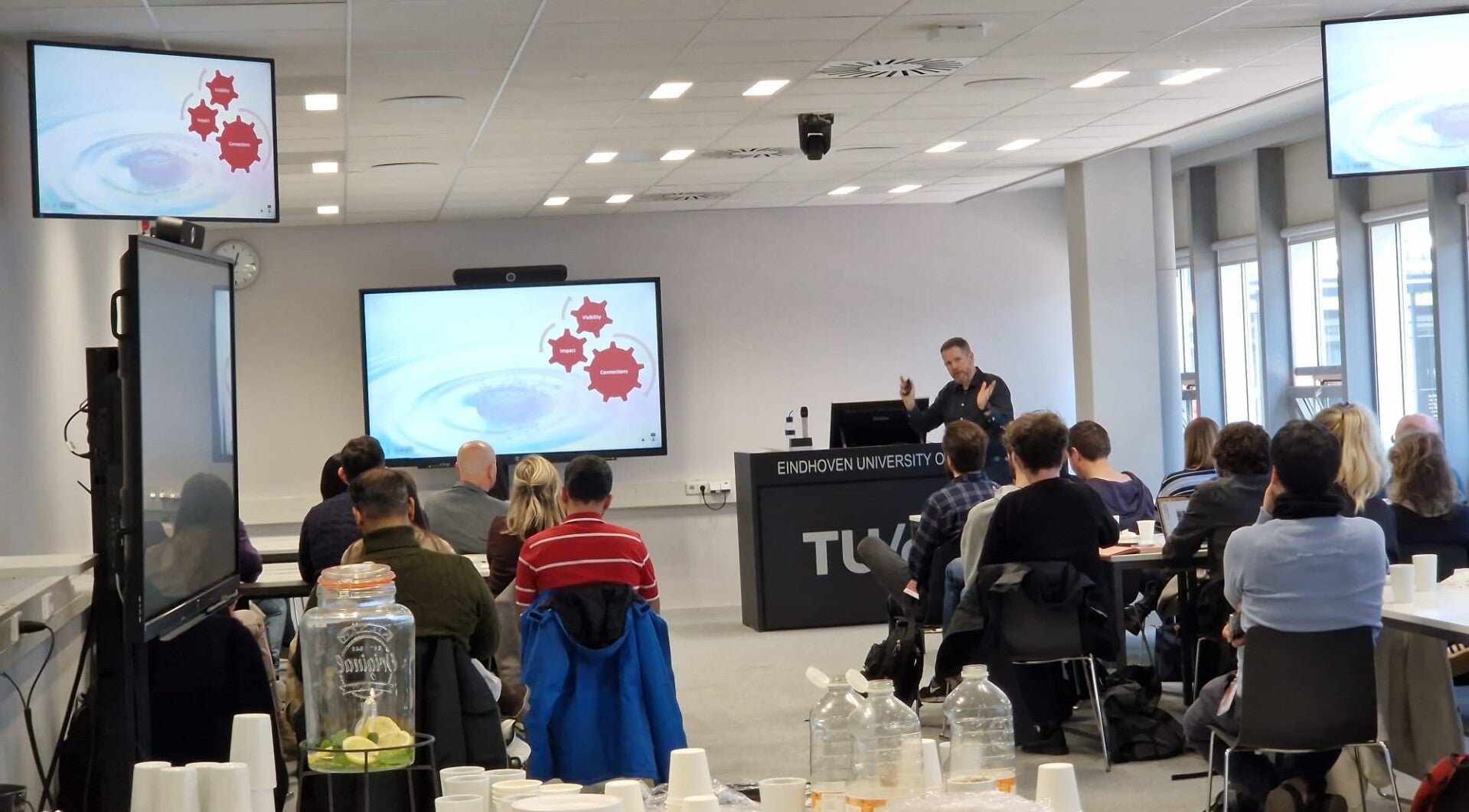
The TU/e session was a bit of an experiment. Rather than presenting and then opening the floor for questions at the end, I wove in a series of Mentimeter questions throughout — asking the audience to respond in real time to things like their main goal for using social media, how they assess their current online presence, where they feel least developed, and what they commit to doing in the next 30 days.
The results were quite interesting, and I learned quite a bit from it. Here is what came out:
On goals: When asked "What is your main goal for using social media as a scholar?", the largest group — 24 out of 48 respondents — said build networks. Only 2 chose make a difference, despite the fact that societal impact is increasingly expected of researchers and features prominently in the book. That gap between what scholars say motivates them and what institutions are asking of them is worth sitting with. Networking is real and valuable, but it is also the most comfortable, least risky goal. Making a difference requires putting something meaningful into the world, which is harder.
On presence: Asked to describe their current LinkedIn presence, 29 respondents said they were "happy with it, but it could be better." Twelve said "I really need to check..." — and zero said they have no LinkedIn at all. So nearly everyone is on LinkedIn, most are aware they are underperforming on it, and relatively few feel their profile actually signals who they are. That is a lot of untapped potential sitting in dormant profiles.
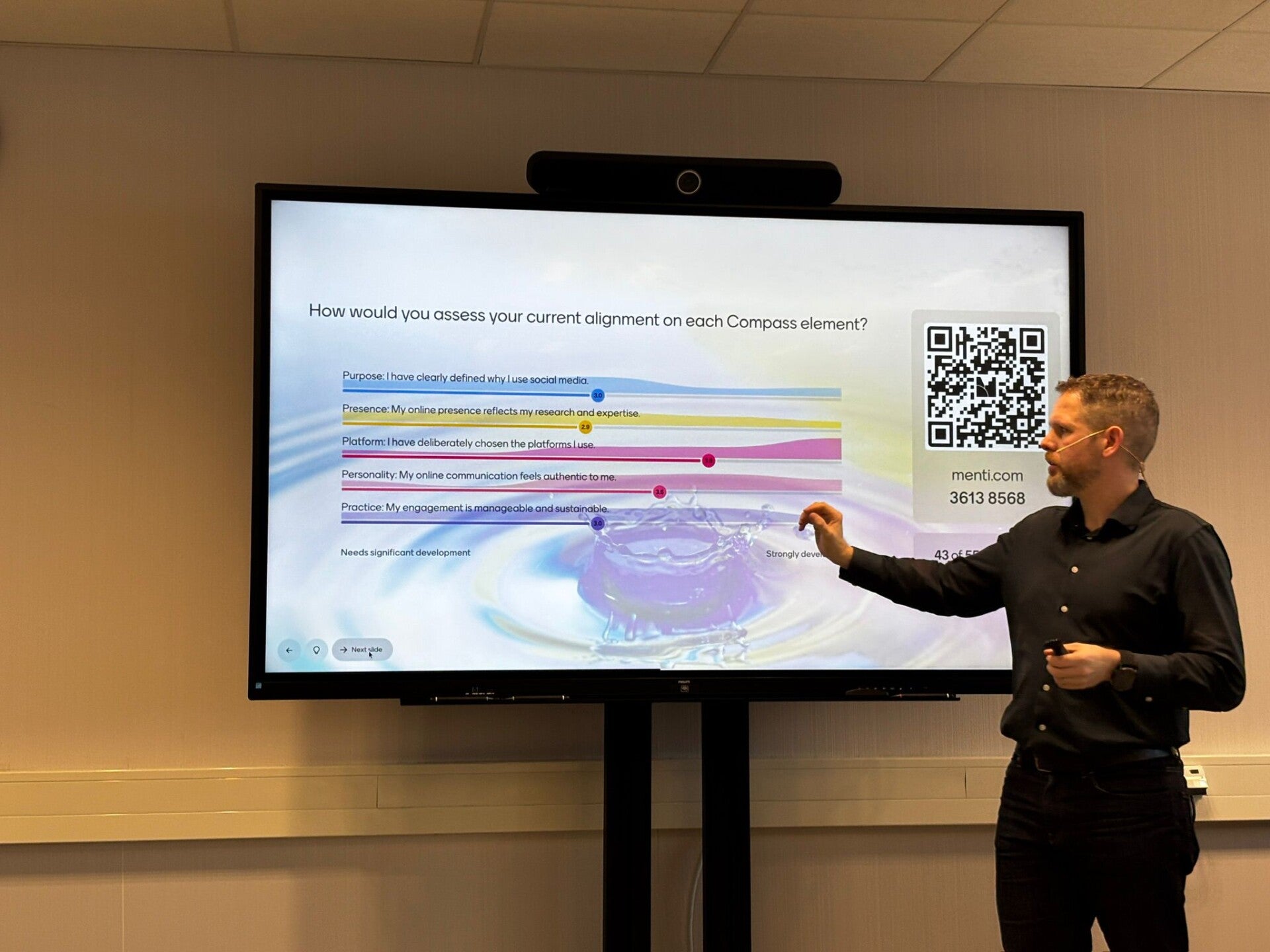
On the Social Media Compass: The five elements of the Compass — Purpose, Presence, Platform, Personality, Practice — scored as follows when participants rated their own development (1–5 scale): Platform came out highest (3.9), which makes sense: people have made choices about which platforms to use. Presence scored lowest (2.9). And Purpose, Personality, and Practice all clustered around 3.0 — right in the middle. In other words, the part that is essentially a logistical choice (picking platforms) is the one people feel most sorted on. The parts that require deeper reflection — why you are online, how you come across, whether your routines are actually sustainable — are the ones where most growth still lies. When asked to name the single biggest growth area, 19 out of 40 respondents chose Presence. That was the clearest result of the session.
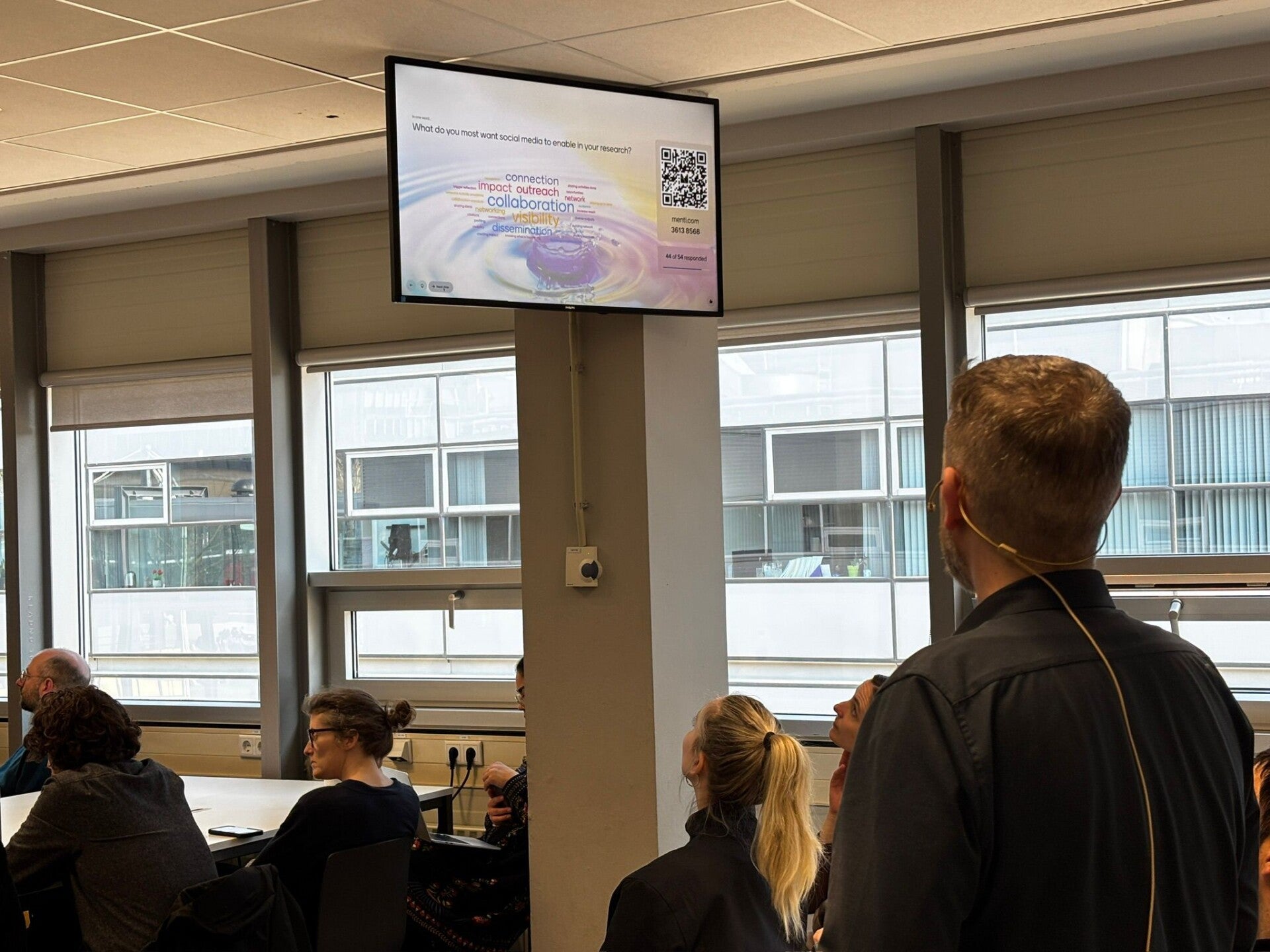
On commitment: Asked what they would experiment with in the next 30 days, the responses were mostly practical and grounded: rewriting a bio that had not been touched in five or fifteen years, posting one authentic reflection, reviewing their profile, scheduling posts. One person wrote they wanted to "find out for myself why voice alignment is so exhausting, apart from finding useful content." That is a more honest answer than most, and it points to something real — building a consistent, authentic voice online takes genuine effort, and not everyone finds that energy comes naturally.
The session ended with a quiz, partly to celebrate the book's launch, partly because it is fun to reward the person who actually remembers that Mark Granovetter coined the term "strength of weak ties." And yes, the answer that received the most likes on my LinkedIn post was my dog — which probably says more about the algorithm than about my scholarly impact, but is at least honest.
The effort nobody tells you about
A book launch, at least this one, turned out to require a genuinely substantial amount of time and energy. There is the promotional work — blog posts, social media campaigns, platform-specific content, interview requests, event coordination. There is the travel, the preparation, the follow-up. And there is a subtler cost: each session requires you to find the right framing for that particular audience. What works at TiSEM is not quite what works at TU/e, which is not quite what works in an online webinar with participants located somewhere else in the world. You learn by doing, and by the time you have learned, the launch window has largely closed.
I say this not to complain — the sessions have been rewarding — but because the book itself has a chapter on Practice and sustainable routines, and I have been testing those principles in real time. "Start small, regular ≠ often" is easier to write than to implement when you have just published something and the world is briefly interested.
On AI: the elephant in the room
Several participants across basically all the sessions raised the topic of AI. So, beyond saying that we actually have a chapter on Productivity and AI in the book, let me elaborate a bit more on it.
A growing number of people are using AI to write their social media posts. Some are using it to generate content wholesale — feeding a paper abstract into a tool and publishing whatever comes out. This has led to a real problem: feeds full of posts that sound polished but feel hollow, where you cannot find the human anymore. There is a term for the worst version of this: "AI slop." It is recognizable and it is spreading.
This matters for the book's argument in a concrete way. The Personality element of the Social Media Compass is specifically about finding and maintaining your authentic voice — sharing as a person, not just as a content machine. AI-generated posts, when they replace rather than support human thinking, work directly against this. They produce the appearance of presence without the substance. And people notice. Several colleagues have told me they have reduced how much time they spend on LinkedIn precisely because they can no longer tell who they are actually reading.
I use AI tools myself — including to help me draft and refine this blog post, which I am transparent about. But the ideas here, the observations, the opinions: those are mine. The AI helps me express them more clearly. That is a legitimate use. What is not legitimate — and what will erode your credibility over time — is outsourcing your thinking. If AI writes what you say, you are not building a voice. You are building a persona, and personas are fragile things.
I am planning a separate, longer post on this topic, because the implications extend well beyond social media. For junior scholars in particular, the question of what happens to your writing when you delegate drafting to AI tools is serious. Writing is thinking. If you do not do it, you do not develop the skill, and you do not develop your voice. That seems worth a post of its own.
What comes next
These sessions — in Copenhagen, Tilburg, Eindhoven, and online — have confirmed that the questions the book is trying to answer are real and widely shared. Scholars at every career stage are uncertain about social media, underinvested in their presence, and carrying around some version of the nagging sense that they should be doing more, or doing it differently.
The Researcher's Social Media Compass is designed to give people a structured way to think through that. Not to produce more posts, but to be more intentional about why they are online, what they want to achieve, and how to do it without burning out.
If you are interested in hosting a session — a webinar, a departmental workshop, a masterclass — I am happy to do those. For academic groups, online sessions are generally free of charge. Reach out through my website if that might be useful.
And if you missed the launch: the book is available via Routledge with a 20% discount using code 26SMA1.
This blog post was drafted with some assistance from AI. The thinking, experiences, and opinions are my own.

Marcel Bogers is a Full Professor of Open & Collaborative Innovation at the Eindhoven University of Technology and a Research Fellow at the University of California, Berkeley.
He speaks, writes, and advises on how organizations can create and capture value through openness and collaboration.
Blog posts written with some help of AI! 🙂
Add comment
Comments